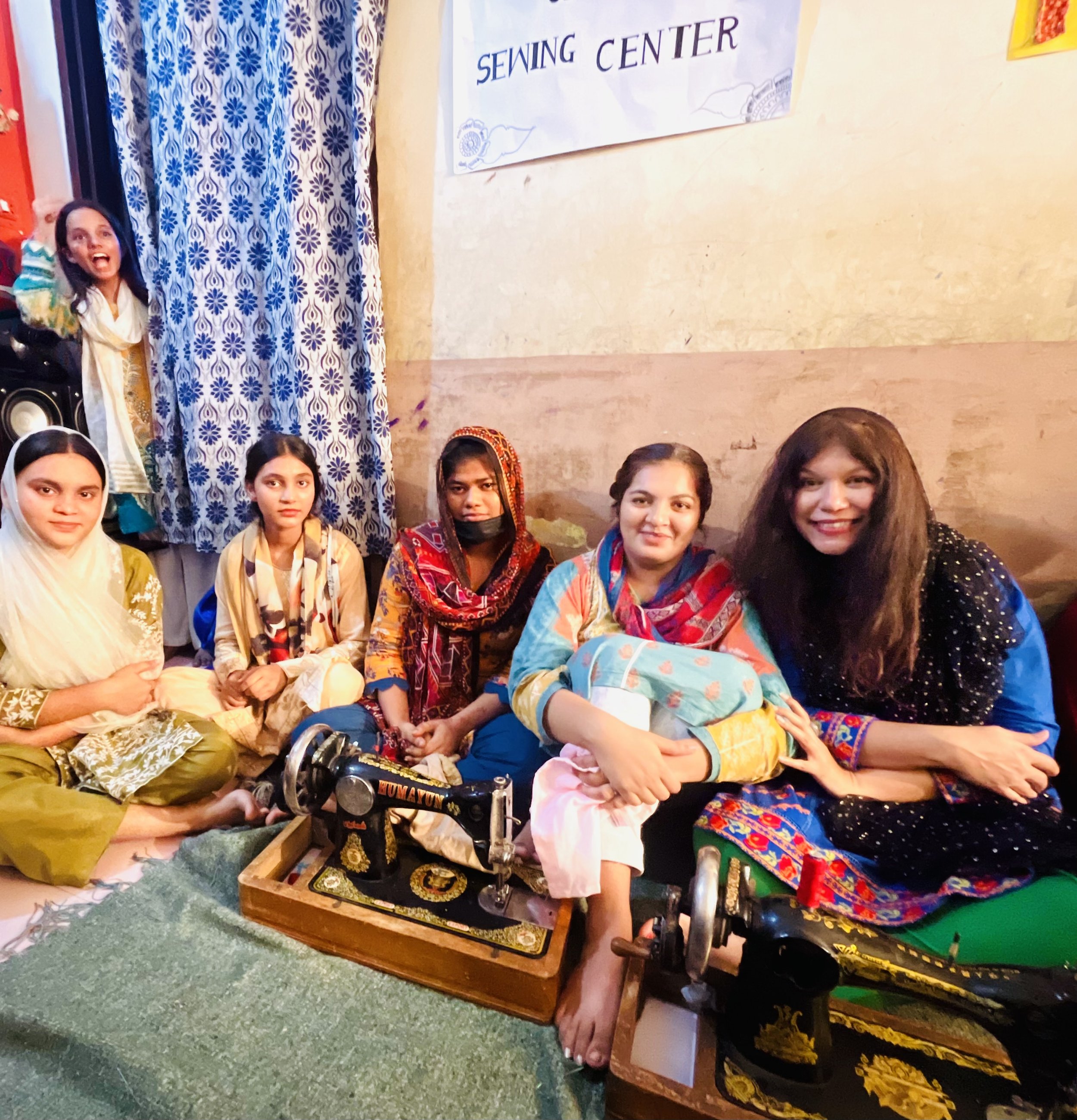
Small beginnings, new opportunities, and the extraordinary women of Pakistan
I’ve often thought about how something that seems so ordinary to one person can represent an entirely different future to someone else. A sewing machine, for example. In many homes, it’s simply something tucked away in a closet, brought out when a hem needs repairing or a piece of clothing needs mending. But for a woman who has had very few opportunities to earn an income, learn a trade, or contribute financially to her family’s needs, that same sewing machine can represent something much larger. It can mean the possibility of working from home, developing a skill that belongs to her, and beginning to imagine opportunities that once felt beyond her reach.
Over the years, some of the work that has become especially dear to my heart in Pakistan has involved creating opportunities for women. Through our partnerships with Pakistani teachers and local leaders, we’ve helped establish four sewing schools where women can learn practical skills that may eventually help them support themselves and their families. We’ve helped provide sewing machines, supplies, and ongoing support for teachers who faithfully invest their time in these women. And although the practical details of running a sewing school might not sound particularly extraordinary, I’ve come to see how much hope can be carried in something as simple as a woman being given the opportunity to learn.
I think often about the circumstances that shape women’s lives in Pakistan. I was born there myself, and although my own life eventually took me to America, I’ve never stopped feeling a connection to the women whose lives have unfolded so differently from mine. Some have grown up with limited educational opportunities. Others carry enormous responsibilities for their children and extended families, often with very little financial security. In many communities, opportunities for women to pursue training or employment can be difficult to access. And yet, when I think about these women, I don’t think first about their limitations. I think about their resilience, their resourcefulness, their love for their families, and the extraordinary possibilities that can begin to emerge when someone invests in their abilities.
One of the things I appreciate most about our sewing schools is that they are rooted in relationships. These are not simply rooms filled with machines. They are places where women can gather, learn from teachers who understand their communities, practice something new, and encourage one another. The women aren’t being handed a promise that everything in their lives will suddenly become easier. They are being given an opportunity to develop a skill, and that opportunity is worth taking seriously. Real change often begins quietly, through ordinary days of practice, patient instruction, and the gradual discovery that something once unfamiliar has become possible.
More recently, my heart has also been drawn toward adult literacy. It’s difficult for many of us to imagine what life would be like if we had never learned to read. We move through our days surrounded by written words, often without giving them a second thought. We read instructions, messages, signs, books, and Scripture. We help children with their schoolwork and make decisions using information that is readily available to us. But for adults who never had the opportunity to attend school, learning to read and write can open an entirely new world. And for Christian women who long to read the Bible for themselves, literacy carries an especially meaningful spiritual dimension.
We’ve begun helping establish adult literacy opportunities in Pakistan, and recently I learned that one of the new classes needed something as simple as books and a whiteboard. I smiled when I heard that, because so much of this work really does come down to such ordinary things. A teacher who is willing to show up. A room where people can gather. A few books. A whiteboard. A sewing machine. A little encouragement. None of these things is especially impressive on its own, and yet together they can become the beginnings of something that matters enormously to the people receiving them.
I think this is one of the reasons I’ve become increasingly drawn to small, community-based ministry. There is something beautiful about work that grows slowly, through people who know one another and are committed to remaining present. I love the thought that long after I’ve returned to America, a teacher will still be standing in front of a classroom, helping a woman sound out her first words. Or that somewhere in a village, a woman will be sitting at a sewing machine, practicing a skill that may help her provide for her children. These moments may never make headlines, but they are no less meaningful because they happen quietly.
When I return to Pakistan, I hope to spend time visiting all four of our sewing schools, encouraging the teachers, meeting the women, and learning how we can continue to support them. I also hope to see how our adult literacy efforts are developing and what additional resources might help them grow. There will undoubtedly be needs we haven’t anticipated and opportunities that emerge only once we’re sitting together and listening. That has been true of so much of this ministry. Some of the most meaningful things we’ve been able to do began with a conversation, a relationship, and a willingness to respond.
I don’t believe that every woman needs someone from another country to arrive with the answers to her life. I believe she deserves to be seen, heard, respected, and given opportunities to use the gifts and abilities she already possesses. And I believe that when we walk alongside women with humility, practical compassion, and the love of Jesus, something beautiful can begin to grow.
Sometimes helping a family write a better story begins with something as simple as a needle, a thread, a book, and someone who believes that learning something new is still possible.